
What are you looking for?
Where did you receive care?
-
MyVirginiaMason has been replaced with the CommonSpirit Patient Portal.
Learn more. -
Virginia Mason Medical Center & regional centers
Log in to Commonspirit Patient Portal > -
All other locations
Log in to VMFH MyChart >
Chronic Pain Self-Management Resources
Eight evidence-based steps for a healthier you
To improve your function and quality of life while living with chronic pain, consider these eight evidence-based steps: core strengthening and muscle balancing, stretching and heat for myofascial health, regular exercise, standing more, following a low inflammatory diet, maintaining a healthy weight, prioritizing mental health and pain education, and maintaining sleep quality. Each step offers a "Good, Better, Best" approach, providing actionable strategies ranging from simple lifestyle adjustments to professional guidance, along with helpful resources to support your journey towards a healthier you.
This content is intended for informational purposes only and does not constitute medical advice. It is not a substitute for professional medical advice, diagnosis or treatment. Always consult with your physician or other qualified health care professional to determine the best course of treatment for your individual needs.
-
Arthritis of the spine and joints is a normal aging process that results in changes to bone and cartilage that cannot be reversed. However, we CAN support and stabilize the joints by strengthening muscles and support structures around the joints. Core strengthening and muscle balancing is a DAILY process that can be slow but is one of the best treatments available for chronic pain.
Good: Lower back pain exercises (The Big 3) (15 minutes/day).
Better: Advancing home core strengthening program.
Best: Work with a physical therapist to fine tune movement patterns (referral provided).
-
Chronic pain can lead to tight muscles that don’t receive adequate circulation resulting in inflammation and pain in the muscles and connective tissues. Stretching and massaging the muscles followed by heat can restore circulation and reduce inflammation and pain.
Good: Understand what myofascial pain is and what treatment approaches are available.
Better: Learn about self myofascial release techniques.
Best: The best evidence for myofascial pain treatment recommends 10 minutes of muscle stretching/massage/release directly followed by 10 minutes of moist heat 4-5x/day. Moisture with heat is important to carry heat further into tissues. Explore muscle stretching/massage/release and moist heating pad products that work best for you through pharmacies and/or online retailers.
-
You may wonder how exercise is possible in the setting of pain, but movement is one of the best treatments available for multiple conditions to include chronic pain. Movement is medicine. Explore types of movement/exercise that make you feel strong and well.
Good: Exercise at moderate intensity 30-60 minutes/day, seven days a week. As you progress, add strength training (weights) three days a week.
Better: Begin practicing yoga. Yoga has proven to be one of the most effective treatments for chronic pain as it incorporates strength, balance, breath work and spiritual elements.
Best: Exercise and work with a physical therapist (referral provided).
-
Good: Know the health risks of sitting and the many benefits of standing.
Better: Minimize chair use and optimize ergonomics. Modify workstation and/or consider a standing desk.
Best: Improve posture.
-
What you eat can impact how your body processes pain signals.
Good: Cut out boxed and processed foods. Pre-load with an apple before meals and increase greens intake.
Better: Use a diet tracking app.
Best: Follow the DASH Diet.
-
Good: Read How Not to Diet book by Michael Greger, MD, and/or watch his presentation.
Better: STOP drinking calories. Drink water, unsweetened tea, or seltzer.
Best: Work with Nutrition Services for a personalized plan (referral provided).
-
Understanding chronic pain is key to managing it effectively. Pain psychology services can help you learn about the neuroscience of pain, the effects of chronic pain on mood and how to effectively respond to it. We will work with you to help you treat your pain through effective, evidence-based tools founded in pain neuroscience education, cognitive behavioral therapy, mindfulness skills and acceptance therapies. This process can help you build a toolkit for managing pain, gain resilience and build confidence.
Good: Practice meditation and/or mindfulness. Complete a free online Mindfulness-Based Stress Reduction (MBSR) course.
Better: Develop your Direct your Own Care (DOC) Roadmap by David Hanscom, MD.
Best: Meet with Pain Psychology to learn techniques and coping strategies for pain relief. The video below provides an overview of what you can expect to learn when you see a pain psychologist.
-
It is well understood that a tired mind is more sensitive to pain signals. Simply put, when you are tired, you hurt more.
Good: Get at least 7.5 hours of sleep a night.
Better: Optimize sleep by minimizing chemicals and habits that interfere with sleep.
Best: Investigate sleep disorders if needed (sleep study referral available).
Your pain treatment plan may include the following approaches
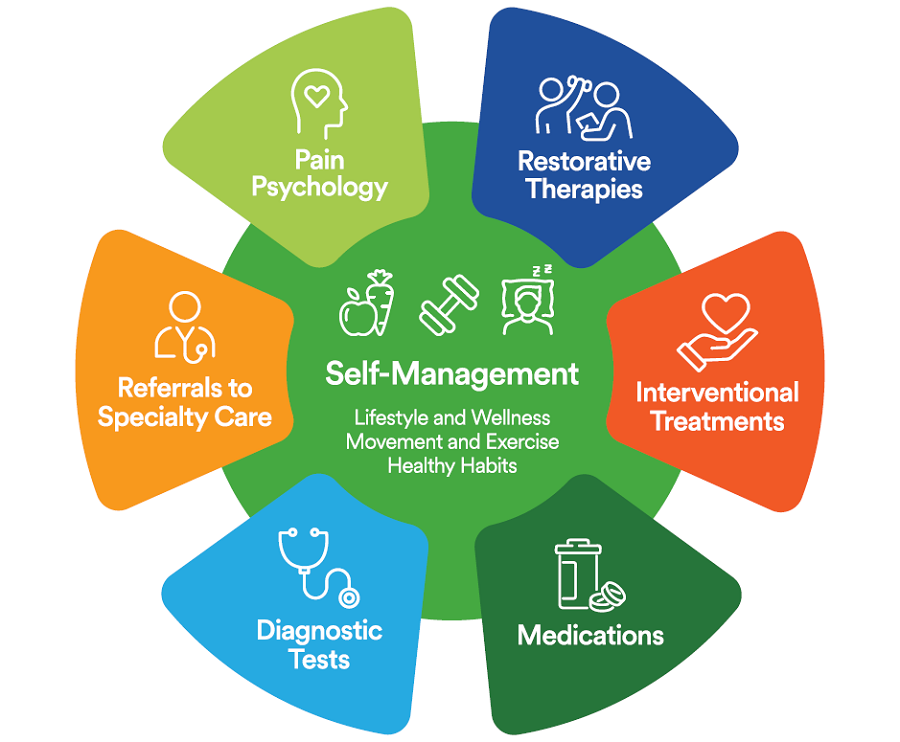
|
Pain Psychology
Referrals to Specialty Care
Restorative Therapies
|
Self-Management
|
|
Medications
Interventional Treatments
|
Performance triad: sleep, activity and nutrition Diagnostic Tests
|
Find the right provider for your pain
Virginia Mason Franciscan Health's team of pain medicine specialists diagnose and treat many types of pain, including chronic pain. Doctors specializing in pain medicine guide your treatment and work with other specialists to ensure a seamless experience.