
What are you looking for?
Where did you receive care?
-
MyVirginiaMason has been replaced with the CommonSpirit Patient Portal.
Learn more. -
Virginia Mason Medical Center & regional centers
Log in to Commonspirit Patient Portal > -
All other locations
Log in to VMFH MyChart >
A Telehealth Appointment May Have Saved Jamila; A Stroke Altered Her Life
May 2026
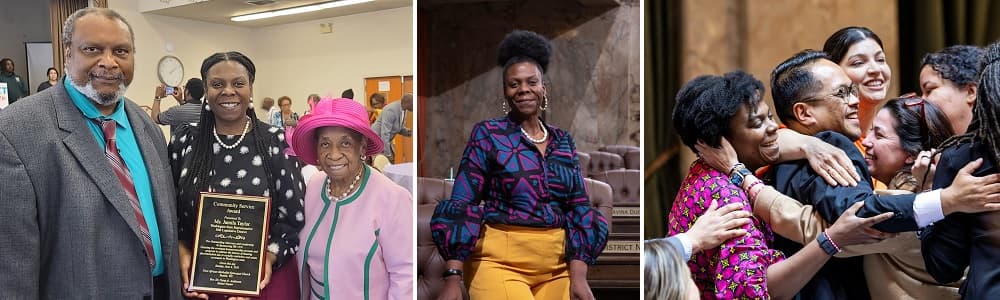
Jamila Taylor had been grappling with the immense weight of her responsibilities both personally and professionally, juggling her duties as an attorney, a Washington state representative, and caring for her mother and twin brother who were struggling with chronic health issues. On May 6, 2025, the unimaginable happened as she joined a routine virtual appointment with her therapist.
Before the call started, she felt like something was off. She went to fix her hair before hopping on the call, but the comb in her hand felt heavy, her arm pulled down by an invisible force. She rushed to put a headband on, but she struggled with it too.
As the appointment started, she realized something was terribly wrong.
“I felt like I was at the dentist,” she said. “Suddenly, I wasn’t able to feel things.”
Her head went foggy and the room around her came in and out of focus.
“I think I’m having a stroke—Please call 9-1-1,” she remembered telling her therapist before she lost consciousness.
Her therapist, shocked on the other side of the screen, immediately called 9-1-1, an action that may have saved Jamila’s life.
“At some point, I must have blacked out,” Jamila recalled. “I had no sense of time. I knew my words were slurring. It was almost like I was getting ready to take a nap.”
An ambulance arrived at Jamila’s home and first responders rushed her to the emergency room and she was quickly transferred to St. Joseph’s Medical Center (SJMC) in Tacoma.
“No matter what VMFH hospital you go to, when you arrive you’re going to get exceptional care,” said Josh Snavely, DNP, ARNP, who is the clinical director for neurovascular services for Franciscan Medical Group and the stroke program chair for VMFH.
“If you need emergent, advanced neurologic care and treatment, like Jamila did, we have it all within our collaborative network of hospitals. Most people don’t realize that up to 2 million neurons die every minute during a stroke. No matter which VMFH hospital you go to—from our most rural hospital to one of our large metro tertiary centers—everyone gets the same level of high quality, rapid care since every minute matters.”
There were signs
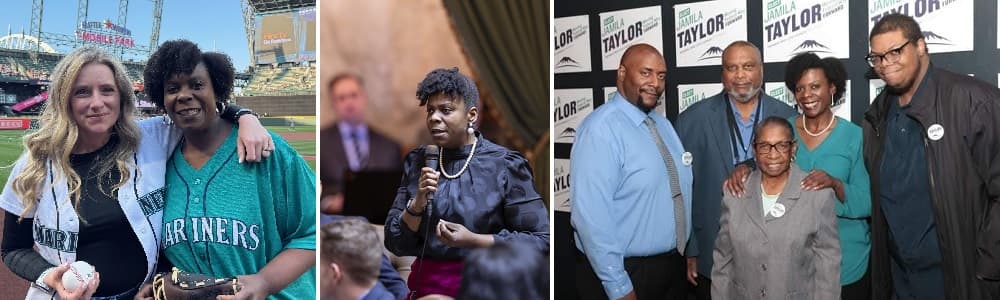
“I didn’t realize how heavy caregiving was until my life was on the line,” Jamila said. “As a caregiver, I wasn’t taking care of myself.”
Jamila had just concluded a stressful legislative session a few weeks prior to her stroke. She was taking care of her family while putting aside her own health needs.
“My blood pressure was high,” Jamila said. “I was trying to care for everyone else, but I stopped caring for myself. At that point, adrenaline was holding me together.”
A stroke happens when blood flow to part of the brain is interrupted or reduced, depriving brain tissue of oxygen and nutrients. Brain cells begin to die within minutes. Time matters, and every second can lead to life-altering consequences.
Jamila suffered a hemorrhagic stroke, although less common, it can be more severe. A hemorrhagic stroke is caused by a blood vessel breaking and bleeding into the brain.
According to Snavely, the incidence of stroke among younger adults is increasing significantly. He notes a steady increase in the number of people under the age of 50 who have experienced a bleeding stroke. “My suspicion is that there is a correlation between hypertension and the increased stress people are experiencing, and the increased number of relatively young individuals suffering hemorrhagic stroke,” said Snavely.
In the United States, someone has a stroke every 40 seconds. Of those cases, hospitals across the country have seen a rise in younger people having strokes. At Virginia Mason Franciscan Health (VMFH), hospitals across the system have seen a significant 22.5% increase in stroke patient admissions from 2023 to 2025. According to the Centers for Disease Control and Prevention, stroke prevalence has increased by 14.6% in adults ages 18 to 44 and 15.7% in individuals ages 45 to 64.
The good news is there are modifiable risk factors that are within an individual's control. High blood pressure, or hypertension, is the number one most controllable risk factor.
“You’re never too young to have a stroke,” said Snavely. There are things we can control, which is the good news. Get your blood pressure and cholesterol checked. Make healthy diet choices. Listen to your gut. If something isn’t feeling right, talk to your primary care provider.”
Care within moments
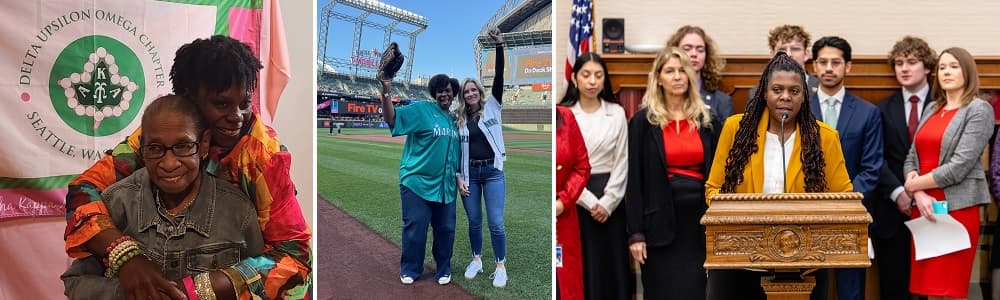
By the time Jamila arrived at SJMC, the neurology team was waiting for her. She underwent additional imaging to evaluate her stroke and was admitted to the neuro/intensive care unit.
“I was in disbelief,” said Jamila.
She had seen a stroke firsthand. Her twin brother had suffered a stroke in 2012, and she saw the impact it had on his life. She knew the signs and symptoms. Still she asked, “Are you sure I had a stroke?”
The neurology team showed her the scan. They caught it early, but they confirmed, ‘You’re in the middle of a stroke.’
An easy way to recognize the signs of stroke are by remembering the acronym BE FAST:
- Balance: Sudden loss of balance or coordination.
- Eyes: Sudden vision changes in one or both eyes.
- Face drooping: Does one side of the face droop or is it numb? Ask the person to smile.
- Arm weakness: Is one arm weak or numb? Ask the person to raise both arms. Does one arm drift downward?
- Speech difficulty: Is speech suddenly slurred, incoherent, or is the person unable to speak? Ask the person to repeat a simple sentence.
- Time to call 911: If someone shows any of these symptoms, even if the symptoms go away, call 911 immediately. Note the time when symptoms first appeared.
“My brain was filling in the gaps for me,” Jamila said. “I thought I’d feel a major headache. I still had use of both legs. I was asking questions.”
But all the symptoms were there.
“When I met Jamila shortly after she arrived to St. Joseph, I was surprised by how well she was doing,” said Snavely. “Based on the stroke she had, I wasn’t expecting her to be able to speak or move her right arm and leg. She had such a positive outlook, and was surrounded by a community of friends and family. It was heartwarming to see the support she had.”
Jamila stayed in the ICU for days recovering from the stroke. When it was time to be discharged from the hospital, the team had a long-term care plan for her. VMFH has a comprehensive stroke team that provides rapid assessment, emergency treatment, inpatient monitoring and follow-up care. From admission to discharge and beyond, care coordinators at VMFH ensure a seamless transition through the stroke care continuum, connecting patients with necessary follow-up appointments and community resources. VMFH also offers stroke support groups, creating a community where survivors and their caregivers can share experiences, tips, and emotional support.
Road to recovery
Simultaneously, while Jamila’s family was going through health journeys, she began one of her own—recovery after stroke.
“I realized having your own health issues doesn’t make things stop around you,” she said.
Jamila started physical therapy, rehabilitation, speech therapy, and continued counseling.
Those things were an anchor. So much was changing in her world.
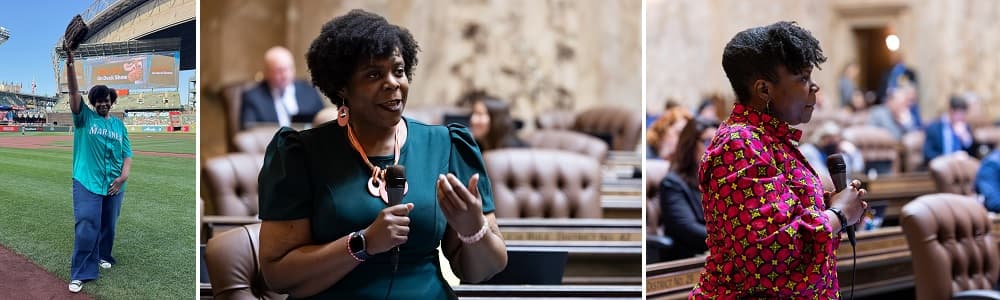
Today, Jamila is a year out from her stroke, and she’s getting back to life, with a few small adjustments.
“This year I want to reset my goals for better health,” she said. “I want to be more physically active. I don’t want to live a sedentary lifestyle. I want to pursue things that bring me joy, and I’m finally recognizing that I can’t do it all.”
Jamila said she hopes her story helps raise awareness for stroke, empowers individuals to take preventative measures, and allows caregivers to give themselves grace.
“Stroke often blindsides people, but for many individuals the warning signs are there. If those risks are addressed soon enough, a stroke can often be avoided,” said Snavely. “My hope is that we can raise awareness for stroke, and we can encourage people to make small changes to their daily routines that have a lasting positive impact on their health and their life.”
You can understand your stroke risk factors by completing this short health questionnaire.