
What are you looking for?
Where did you receive care?
-
MyVirginiaMason has been replaced with the CommonSpirit Patient Portal.
Learn more. -
Virginia Mason Medical Center & regional centers
Log in to Commonspirit Patient Portal > -
All other locations
Log in to VMFH MyChart >
The Ripple Effect: One Doctor's Quest to Heal His Community
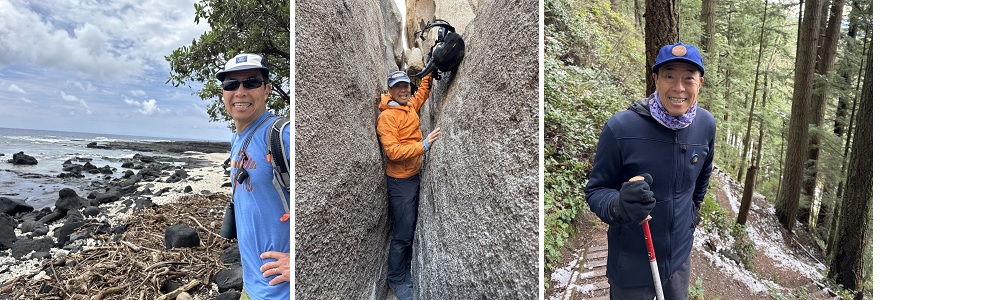
For more than 30 years, Dr. Chao-ying Wu was a family medicine physician, caring for individuals and families in his community. He enjoyed helping people navigate health issues and worked tirelessly to improve the health and wellbeing of the people in his clinic.
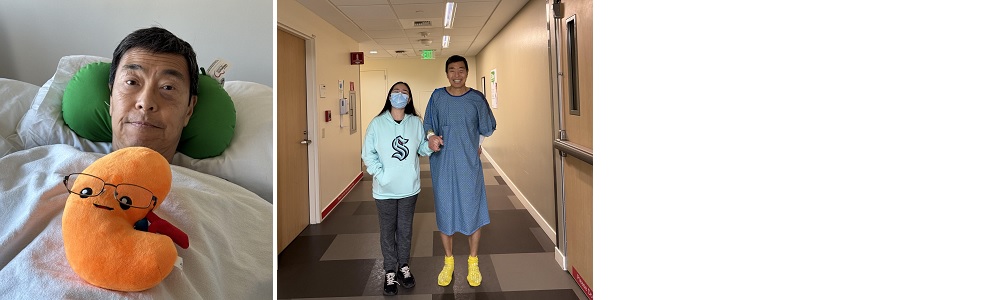
When he retired, his dedication to his community didn’t falter. He found himself back in the hospital, a place familiar to him. This time though, he wasn’t wearing a white coat; he was a patient himself.
Whatcom County, home to over 200,000 residents, has fewer than 30 people awaiting a life-saving kidney donation. Dr. Wu saw that statistic as a powerful opportunity to make a life-saving difference.
Dr. Wu got to work once again healing his community, one person at a time. Starting with becoming a donor himself, at age 67, he made it his goal to help reduce the County waitlist to zero.
A moonshot mission: eliminating the waitlist
Dr. Wu first learned about the Whatcom County waitlist from a physician colleague, Dr. William Lombard. As the former medical director of Mt. Baker Kidney Center, Dr. Lombard had previously launched a "moonshot" initiative to eliminate the local kidney transplant waitlist by 2030.
"Bill has had this idea for years," Dr. Wu explained. "When I reached out to him to help me decide about moving ahead with kidney donation … that's when I thought, ‘I only get to do this once. So we might as well make the most of it.’”
His decision to become a donor led him to Virginia Mason Franciscan Health, where he collaborated with Heather Swonger, a living donor coordinator.
Many individuals needing a kidney transplant wait for years, and some tragically don't survive long enough to receive one. Living donation offers significantly faster access to a transplant.
The path to donation
To qualify as a living kidney donor, individuals must be over 18 and in generally good physical and mental health. A dedicated Transplant Team conducts thorough medical and psychosocial evaluations, including an initial health screening and lab work, to ensure donor safety and well-being. The entire process, from initial interest to surgery scheduling, typically takes a few months.
As he began the process, Dr. Wu meticulously documented every step of his journey. His aim was to share his experience, hoping to inspire others to consider becoming donors.
Initially, Dr. Wu came forward as a non-directed donor. However, as the process unfolded with Heather, he designated a "standard voucher holder," ensuring his donation would directly benefit someone within Whatcom County. This "voucher program," facilitated by the National Kidney Registry, allows for local life-saving transplants even when direct donor-recipient matches aren't immediately feasible.
It's common for donors to be incompatible with an intended recipient due to blood type or immunological factors. Paired kidney donation offers a solution: incompatible donor/recipient pairs can "match" with another pair in a similar situation, enabling a swap where each donor gives to the other pair’s recipient.
Swonger, who has worked with hundreds of donors, noted the extraordinary nature of Dr. Wu's vision. "Many of our donors go through this process and then want to give back afterwards … But to come in early and really want to do this grassroots community engagement is amazing.”
Why living donations are needed
While dialysis is life-sustaining, it isn't a long-term solution and significantly impacts a person's quality of life. As Swonger highlighted, “Dialysis can be really hard on the body, and it's difficult to live a normal life when you have to be either in-center three times a week or using an at-home dialysis unit every night.”
Every donation is life-saving, but the advantages of living kidney donation are well-documented. Kidneys from living donors typically last longer—12 to 15 years, compared to 8 to 10 for deceased donor organs. They also tend to function more rapidly, minimizing post-transplant complications. The most profound benefit, however, is bypassing the often lengthy wait time and the ability to proactively schedule surgery and transplant. In Washington state, the typical wait for a deceased donor transplant is three to five years.
“We’re talking months versus years,” Heather emphasized regarding the shortened wait times through programs like the National Kidney Registry. "It drastically decreases your wait time."
Everyone has a role
Dr. Wu, ever the pragmatist, recognizes that not everyone can be a donor. Yet, he firmly believes everyone can be educated about the process and offer support in their own way.
"I'm a pretty privileged person," he admitted. “Retired, without the worry of lost wages, my process was smooth. Yet, for many, especially populations who are at higher risk for kidney disease, the logistical and financial hurdles could be insurmountable.”
As he prepared for his own surgery, Dr. Wu held onto the conviction that a collective effort would not only shorten waitlists but also illuminate the broader need for preventative care. Going forward, he hopes to help the community address underlying conditions like diabetes and hypertension that often lead to kidney failure. His vision is holistic, extending from the operating room where his kidney would grant a stranger a new lease on life, all the way to the heart of the community, where better prevention and equitable access could avert disease entirely.
Today, and several months post-surgery, Dr. Wu is on his way back to his active lifestyle, skiing, swimming, biking, and running. Strength training is next.
The recipient of his voucher is nearly a month post-transplant (which also took place at Virginia Mason Medical Center) and is doing very well with strong kidney function. Dr. Wu shared her energy is up and she feels more and more like herself again.
Keeping hope and the moonshot goal alive
While the moonshot goal has a few lives and years before it’s complete, Dr. Wu is thrilled to know Bellingham and Whatcom County are one step closer. He, and the countless others who have stepped forward alongside him, are proving that even a single act of generosity, fueled by a collective vision, can create an incredible ripple effect of healing.
More than 100 people attended a recent donor event, with several new prospective donors expressing interest.
As Dr. Wu shared, “Everyone can help just by talking about donation so that it becomes well known that you can donate a kidney without being a match for the person you are trying to help. In fact, the voucher program is a force multiplier, and when you donate you'll help at least two people, and maybe more.”
And the physician in Dr. Wu added, “Everyone can benefit from establishing care with a primary care physician, getting their blood pressure checked regularly, and receiving screening for diabetes as appropriate. That way we can prevent kidney failure in most cases, which is even better.”
The dedicated team at Virginia Mason Franciscan Health has been performing living donor transplants for more than 25 years. It is the first medical center in the Pacific Northwest designated as a Donor Care Network Center of Excellence by the National Kidney Registry. This designation recognizes its commitment to high-quality care, safety, and support for living kidney donors. More information is available here.