
What are you looking for?
Where did you receive care?
-
MyVirginiaMason has been replaced with the CommonSpirit Patient Portal.
Learn more. -
Virginia Mason Medical Center & regional centers
Log in to Commonspirit Patient Portal > -
All other locations
Log in to VMFH MyChart >
Is Your Wearable Device Trying to Tell You Something? Understanding Your Heart Rate and When to Talk to Your Doctor
January 2026
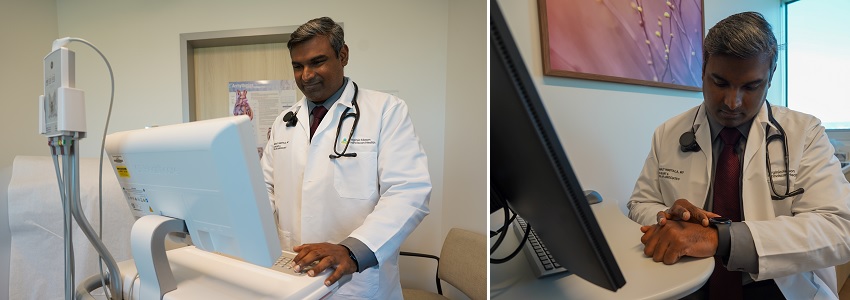
Wearable devices give a brief window into personal health, tracking things like heart rate, sleep, steps and more, but for many consumers, the data can feel daunting. Heart rate is one of the most frequently monitored metrics, and devices make tracking heart rate easy – but what do the numbers really mean?
If you've ever found yourself asking, "What does my heart rate mean?" or even, "Should I be worried about what my watch is telling me?" – you're not alone. It’s a common query and cardiology experts at Virginia Mason Franciscan Health (VMFH) are here to help.
“Wearable devices pretty accurately monitor heart rate, but that's just one piece of the puzzle,” said Susrut Pendyala, MD, a board-certified electrophysiologist at St. Joseph Medical Center in Tacoma. “What's far more crucial than just the number itself are the symptoms you might be experiencing. If you're feeling lightheaded, dizzy, or experiencing other symptoms, you should notify your doctor. If you’re having severe symptoms, you should seek him immediately.”
Is there a "normal" heart rate?
The simple answer is: it varies! Your heart rate is dynamic and influenced by countless factors. Here are some general guidelines for adults:
Resting Heart Rate: Typically ranges from 60 to 100 beats per minute (bpm). This does not mean that having a heart rate less than 60 is always abnormal. Elite athletes may have resting heart rates in the 40s or 50s.
Exercising Heart Rate: Will naturally increase during physical activity. Your maximum heart rate is roughly 220 minus your age, but it's best to consult a physician.
Sleeping Heart Rate: Often drops lower than your resting heart rate, sometimes into the 40s or 50s, as your body relaxes.
"For detecting a specific type of irregular rhythm, the accuracy of these personal health trackers is actually quite good,” said Dr. Pendyala. “If your watch tells you it suspects something, you should follow up with your primary care provider."
When should I be concerned?
There are times when you should contact your primary care provider if you have a fast heart rate or low heart rate:
If your resting heart rate is regularly above 100-120 bpm without an obvious explanation (like recent exercise or illness).
Sudden and unexplained jumps: If your heart rate suddenly jumps very high (e.g., to 150+ bpm) and stays there, especially if you were previously at rest.
If your rapid or slow heart rate comes with:
- Shortness of breath
- Dizziness or lightheadedness
- Chest pain or discomfort
- Fainting or near-fainting spells
- Weakness or fatigue
- Feeling of "palpitations" (your heart pounding or fluttering)
- Confusion or memory problems
Sustainably low heart rate (especially if it's new for you): If your resting heart rate is consistently below 50 bpm and you aren't a highly-conditioned athlete or on relevant medications.
Trust your body, not just your device
It’s important to note that your wearable device is not a medical diagnostic tool. If you feel like something is off, reach out to your primary care provider. For example, if your heart rate looks "normal" on your device but you feel unwell, dizzy, or have chest discomfort, seek medical attention immediately.
If you have persistent concerns, new or unexplained symptoms, or receive consistent "alerts" from your device, gather your data and schedule an appointment. You can use the readings from your wearable as interesting data points to bring up with your physician.
"We've definitely had patients come in because their device alerted them,” he said. "It's not uncommon for people to be completely asymptomatic – they feel fine – but their device alerts them and prompts them to reach out to their health care provider."
As an electrophysiologist, Dr. Pendyala’s role is unique. He helps diagnose and manage cardiac rhythm disorders, personalizing care to meet each patient’s needs. He combines compassionate, expert care with surgical precision when needed.
"Our role is to evaluate each patient individually," said Dr. Pendyala. "Are they experiencing a very low heart rate? Do they potentially need something like a pacemaker? If they have an abnormal rhythm, we work together to figure out the best course of action. We always aim to present all the options and help patients make truly informed decisions about their care."
You can learn more about your heart health by taking this quick assessment.
VMFH provides world-class care for a range of heart conditions, and the heart team is composed of experts across specialities. VMFH heart center provides the highest quality cardiac care and is among the best heart programs in the nation, providing a full range of cardiology care, cardiac surgery and minimally invasive procedures using the latest technology, and care is available close to home.