
What are you looking for?
Where did you receive care?
-
MyVirginiaMason has been replaced with the CommonSpirit Patient Portal.
Learn more. -
Virginia Mason Medical Center & regional centers
Log in to Commonspirit Patient Portal > -
All other locations
Log in to VMFH MyChart >
Breast Cancer Rates Increasing, but There is Good News
November 2025
According to the American Cancer Society, breast cancer is the most common cancer in women in the U.S. It accounts for about 30% of all cancers in women each year. Toni Roberts, MD, PhD, FACP, the Breast Cancer Program director at St. Michael Medical Center, said there is good news. Breast cancer is highly curable if caught early, and although more women are being diagnosed with breast cancer, death rates have been declining.
“It’s a hopeful disease,” Dr. Roberts said. “When caught early, we can cure the vast majority of breast cancer. That’s one of the reasons screening is so important.”
Dr. Roberts says it’s important for women to talk to their primary care provider or gynecologist about their specific breast cancer risk. Family history, certain gene mutations, reproductive history, and hormones can all be risk factors. Studies have shown that estrogen can increase breast cancer risk.
“Most breast cancer is driven by hormones,” Dr. Roberts said. “We are seeing an increase in breast cancer related to earlier estrogen exposure. Girls are starting menstrual cycles earlier and hitting puberty at an earlier age.”
Dr. Roberts said women can take an assessment to understand when they should start screening.
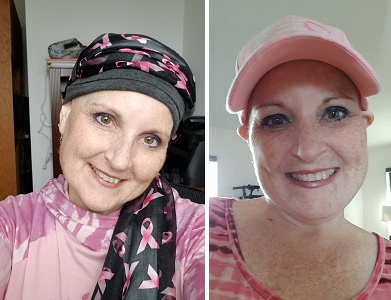
Lori Durham, 59, had a mammogram in October of 2019 and a tiny spot was flagged for follow up. She came back six months later for a second mammogram, and it showed the spot had grown into three tumors, all stage 1.
“I’m thankful I had that mammogram,” said Lori. “Breast cancer doesn’t run in my family. I never dreamed it would happen to me.”
The tumor was right against her chest wall. She experienced no pain or symptoms, and she never felt a lump. Without a mammogram, the cancer may have gone undetected.
“It’s scary when you hear the word cancer,” Dr. Roberts said. “I think people assume they will have to have chemotherapy if they have breast cancer. That’s not true though. You would be surprised how minimal some treatments can be. In many cases, we can remove the cancer in the same day.”
For most women, screening should begin at age 40, but for women at high-risk, that age can differ. The best way to detect breast cancer is through a mammogram, an X-ray of the breast.

Lori Durham
A different approach to care
One of the hurdles Dr. Roberts saw in the community was the time it took from diagnosis to treatment. Women needed care sooner.
“It was taking too long for people to start treatment,” Dr. Roberts said.
Breast cancer is a complex disease, which requires coordination across multiple specialties. Dr. Roberts knew there had to be a better way, so five years ago, she spearheaded an innovative approach to help personalize care faster.
Lori underwent a double mastectomy. After finding out she had breast cancer, she was hit with more unexpected news. She also had ovarian cancer. It was found after she had a hysterectomy and pathology came back. The cancer, located inside her fallopian tubes, was incredibly rare, only impacting around 400 women a year.
“It was one thing after another,” Lori said.
Lori, who lives in Silverdale, said she was thankful she could receive care close to home. She did 12 weeks of chemotherapy for breast cancer, underwent multiple surgeries and then needed radiation and a second round of chemotherapy for the ovarian cancer.
“I had a fantastic medical team,” said Lori. “Dr. Roberts was integral in that. She helped save my life.”
Five years ago, Dr. Roberts saw a need in the community to help get patients care quicker. The Breast Cancer Program at St. Michael Medical Center created a one-stop-shop where women could see a multidisciplinary team of breast cancer experts all in a single visit. After a diagnosis, women don’t have to wait long periods to start treatment–they meet with an expert team and start a tailored treatment plan in about a week.
“Now, we can do it in a day,” said Dr. Roberts.
VMFH uses a team approach to treat breast cancer that brings surgical, radiation, and medical oncologists together with other specialists. Not only does someone who is diagnosed with breast cancer have a team to care for the medical needs, but specialists in nutrition, social work, and other disciplines as well.
“Caring for a cancer patient is incredibly complex,” Dr. Roberts said. “We have to be a very good generalist, in order to be a specialist, and we have to treat a person’s whole body.”
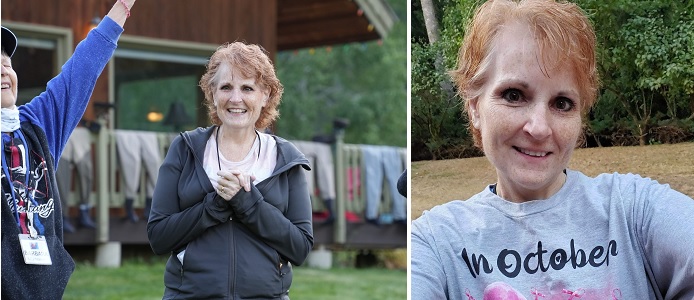
Today, Lori is celebrating five years cancer-free from ovarian and breast cancer, and she dedicates her time to giving back to others.
Lori works in a rehabilitation hospital, and she said cancer always touched her heart. Now having gone through her own cancer journey, it hits closer to home. It’s one of the reasons she wants to give back to others.
She is currently on the board of a nonprofit that reimburses women for transportation costs to and from cancer treatment.
“Whatever the cost, we make sure the barrier to cancer treatment isn’t transportation,” she said.
Lori says she hopes her story will help other people currently going through cancer treatment.
“My hope for the future is that I can be a beacon of light,” said Lori. “I want people to know I’ll be there for them. I want to help in any way I can. I want to be a soft place for people who want to come and talk, and for people to know I understand.”
Addressing disparities
Every three years, Virginia Mason Franciscan Health (VMFH) completes a health needs assessment for each hospital. The Community Health Needs Assessment helps address the most pressing needs in the communities VMFH serves.
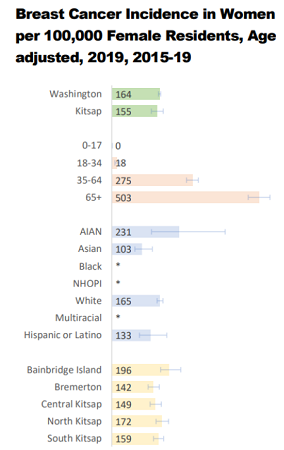
“The Community Health Needs Assessment is a commitment we have to the community,” said Stephanie Christensen, Community Integration Program Manager at VMFH. “The results of that assessment drive our community health priorities. We use both quantitative and qualitative data. We can look at data on screening and incidence. We can see if disparities exist and where we need to focus. They help us identify a priority and determine how to tackle it.”
The data showed high incidence rates of breast cancer in some populations and the goal was clear: increase screenings where rates are higher.
This year, VMFH partnered with community groups in Kitsap County to bring screening events to populations where breast cancer rates were higher. In October, three screening events were held in Kitsap County.
Caring for her community
“The hope is one day we can cure cancer,” Dr. Roberts said.
Until then, Dr. Roberts said her team will be there to provide the best care possible for their community.
Dr. Roberts says there are things you can do to reduce your risk of breast cancer and increase your chances of survival:
- Perform self exams
- Be physically active (only two hours a week of physical activity can decrease your risk)
- Maintain a healthy weight
- Limit alcohol
- Talk to your doctor about your personal breast cancer risk
“Most importantly, get screened,” she said.